Boost your design productivity, part 2
Five tips to improve your efficiency and effectiveness
In the first part of this article, we covered how to manage one’s energy and make the most out of our time through deep work. Here we’ll go over how to:
- Reign in the meetings — pick up the phone, enforce boundaries, set meeting objectives, and allocate a no-meeting zone
- Plan your work — under schedule yourself and overestimate the complexity of a task, do more bottom-up planning vs. top-down
- Triage — reassess your priorities and focus on what matters
1. Reign in the meetings
As an individual contributor designer getting heads down time to do deep work is key. However as we know getting this time can be a challenge. We find ourselves in the middle of a tough problem when we get bombarded with notifications, e-mails, and worst of all—unexpected meetings.
To be clear not all meetings are bad and this isn’t about locking yourself in a cave and eschewing all forms of communication. Rather, you need to find the right balance between communication (and new info) and the deep work time that leads to high-quality output.
Here’s how you can balance the two.
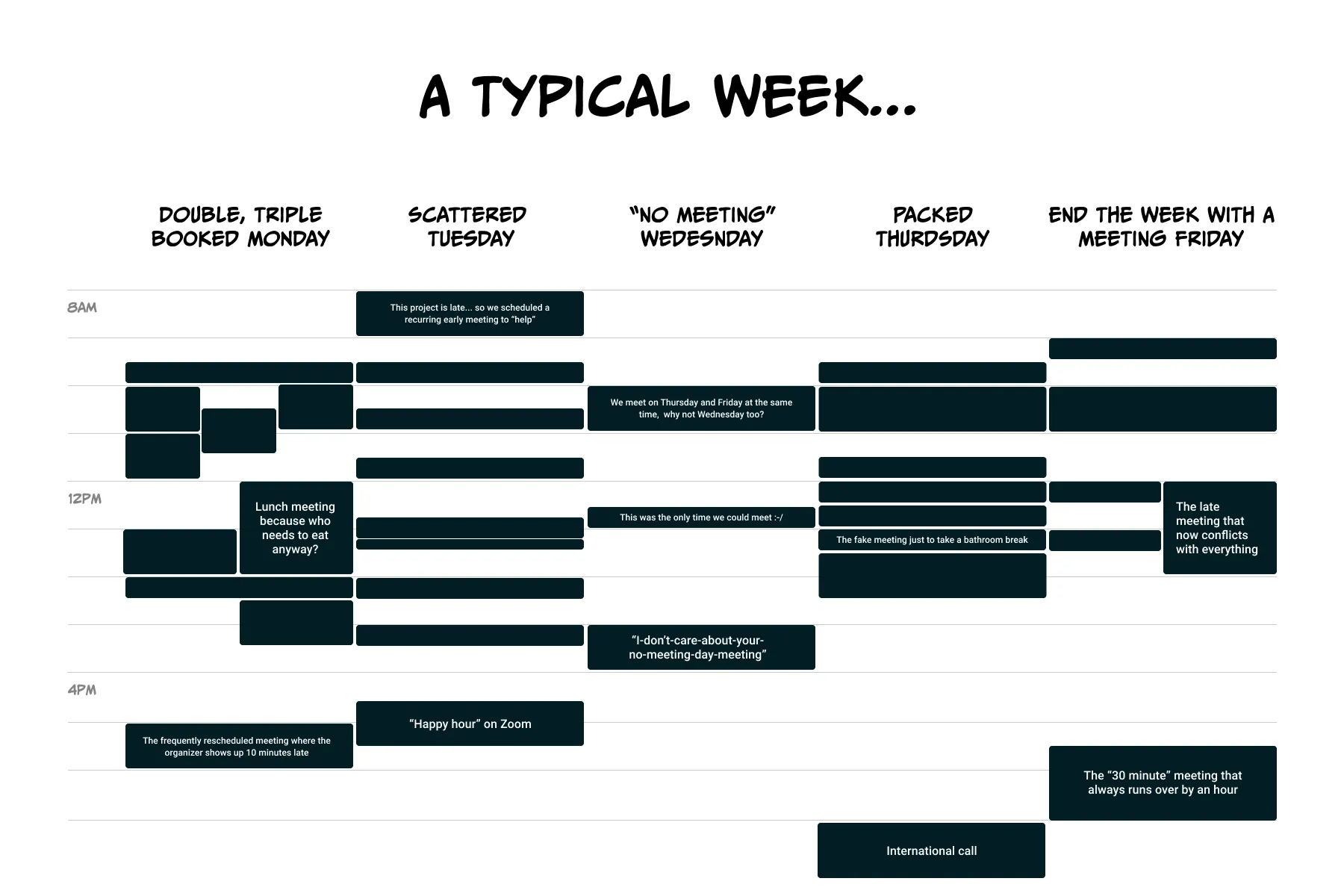
So what does your calendar look like?
Can this be a 5-minute conversation?
By default meetings take 15 minutes at minimum and most apps start off with 30-minute increments. With at least two people in a meeting, this can be an hour of everyone’s time. Pre-pandemic, walking by someone’s desk was an easy alternative but the rules of the game have changed.
That said, there’s no harm in calling someone whether on Slack or even on the old fashioned telephone. That’s right, believe it or not your phone has a phone feature. A brief talk can be enough to skip the meeting while avoiding the dragged out interruption and confusion from text messages.
Enforce boundaries
Inevitably even with blocking out time — there are bound to be incoming meetings and projects. If I have the option I try to push my meetings towards the middle of the day while reserving time for myself in early mornings and late afternoons.
Decline where there is no value
At the same time, don’t be afraid to skip meetings where you don’t feel like you’ll add value. If the context isn’t clear—reach out to the organizer to understand how they expect you to contribute. If your attendance is optional, consider declining.
Set objectives and establish context for each meeting
One rule I like to live by is to push back or even decline meetings with no clear agenda. This goes both ways. When I schedule a meeting I also try to include context for participants to get up to speed on. Without objectives meetings frequently end at time or tend to run over—with objectives, there’s a chance you can wrap things up early.
Consider a “No Meeting Wednesday”
For some reason, perhaps because it falls in the middle of the week, Wednesday became the right candidate for a no-meeting day. The benefit of the team agreeing to a no-meeting day ensures everyone can have the time that they need to get deep work done.
2. Plan your work
Be optimistic with your goals but pessimistic when planning. Assume you’ll run into roadblocks: delays, not getting the answer you need in time, etc. Bottom up planning helps you anticipate these bumps in the road.
Under schedule and overestimate
Now sometimes, especially when you’re early on in your career you have no idea how long a project can take. Even later in your career projects that look deceptively simple might hide a lot of complexity once you start getting into the work.
To be a valuable individual contributor you have to be good at managing your time and always hitting the mark when it comes to delivering by a deadline. As you progress—this skill of time management and giving accurate estimates will be invaluable in managing others.
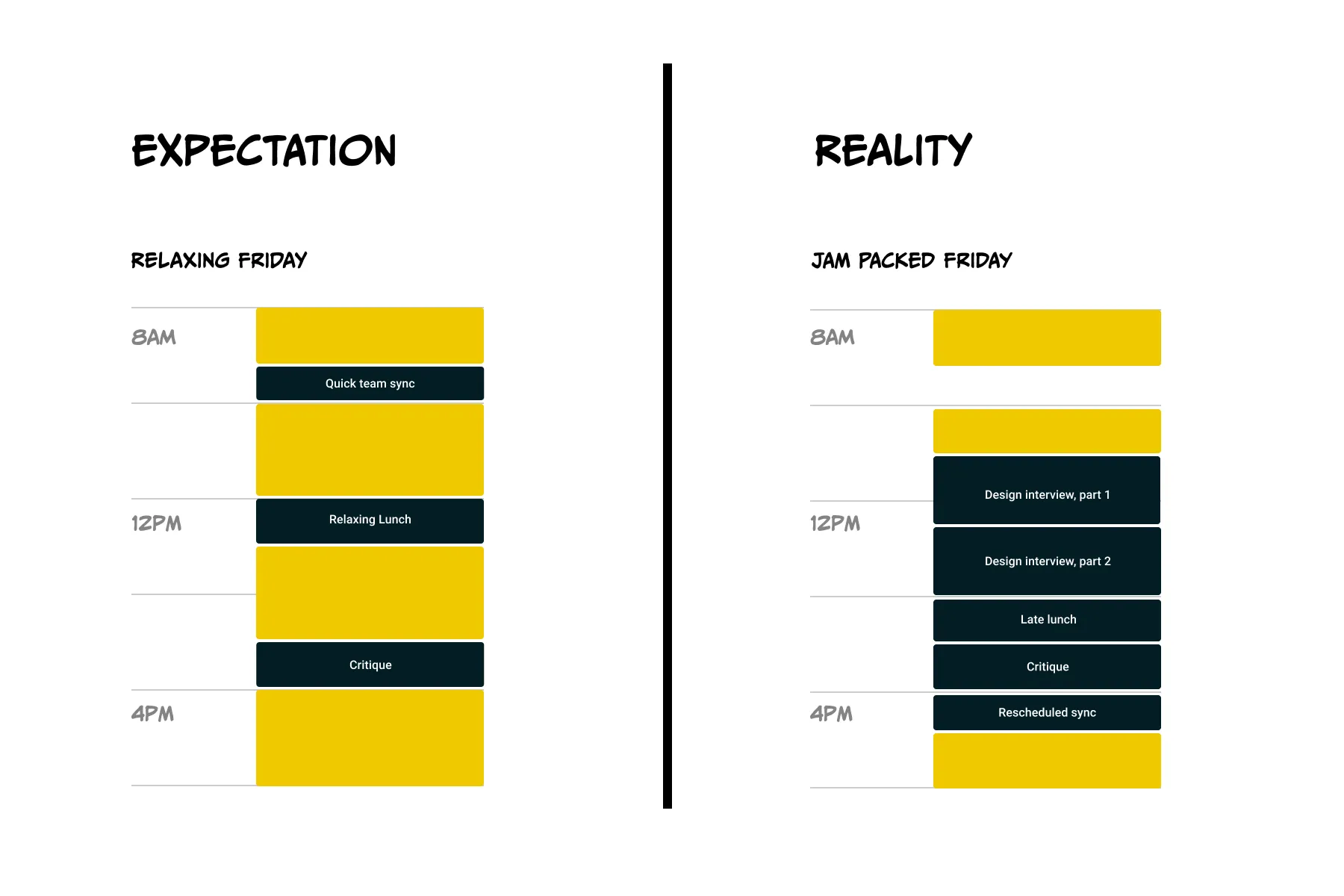
Set yourself up for success by scheduling a realistic timeline, i.e. one that has plenty of buffer.
In one of my previous jobs a co-worker recommended for me to always double the time it takes to do something. At first I thought that was lazy. Did he just want to rest and vest? Turns out no. Unforeseen issues frequently came up along the way: bugs, issues, unknown hardware failures. Suddenly this “lazy” seemed very reasonable. It provided enough time to get work done while addressing ad-hoc issues.
Building a buffer is part of the plan. If things don’t line up and the plan breaks — don’t blame reality, learn to plan better.
Bottom-up planning
For most people, planning doesn’t come easy. Today’s dynamic environments throw even the best planners in for a surprise. It takes the experience of working through multiple projects, including some poorly planned ones, to fully appreciate the strength of a solid plan. But you don’t need to wait for those — start developing your planning skills now.
Generally, people have a tendency to be overly optimistic. Frequently we overestimate the time because we think abstractly, top down. While it’s useful to have that type of thinking when laying out plans with broad strokes across week or even months — we also need to make the plan robust with bottom up planning to check our optimism at the gate.
Once we start looking at ours and other schedules we quickly realize, oh yeah that’s a holiday and people are taking some time off. Or there’s another large project looming. Taking an assessment at the ground level will help you create a more resilient plan.
3. Triage
Even when we’re deep in the work—it’s important to periodically step back. Is the thing you’re obsessing about still matters? Are you spending 80% of your effort just to get a 5% improvement? Sometimes shifting your priority is the smarter thing to do, especially if the other project is more impactful.
And for the most important tip of all…
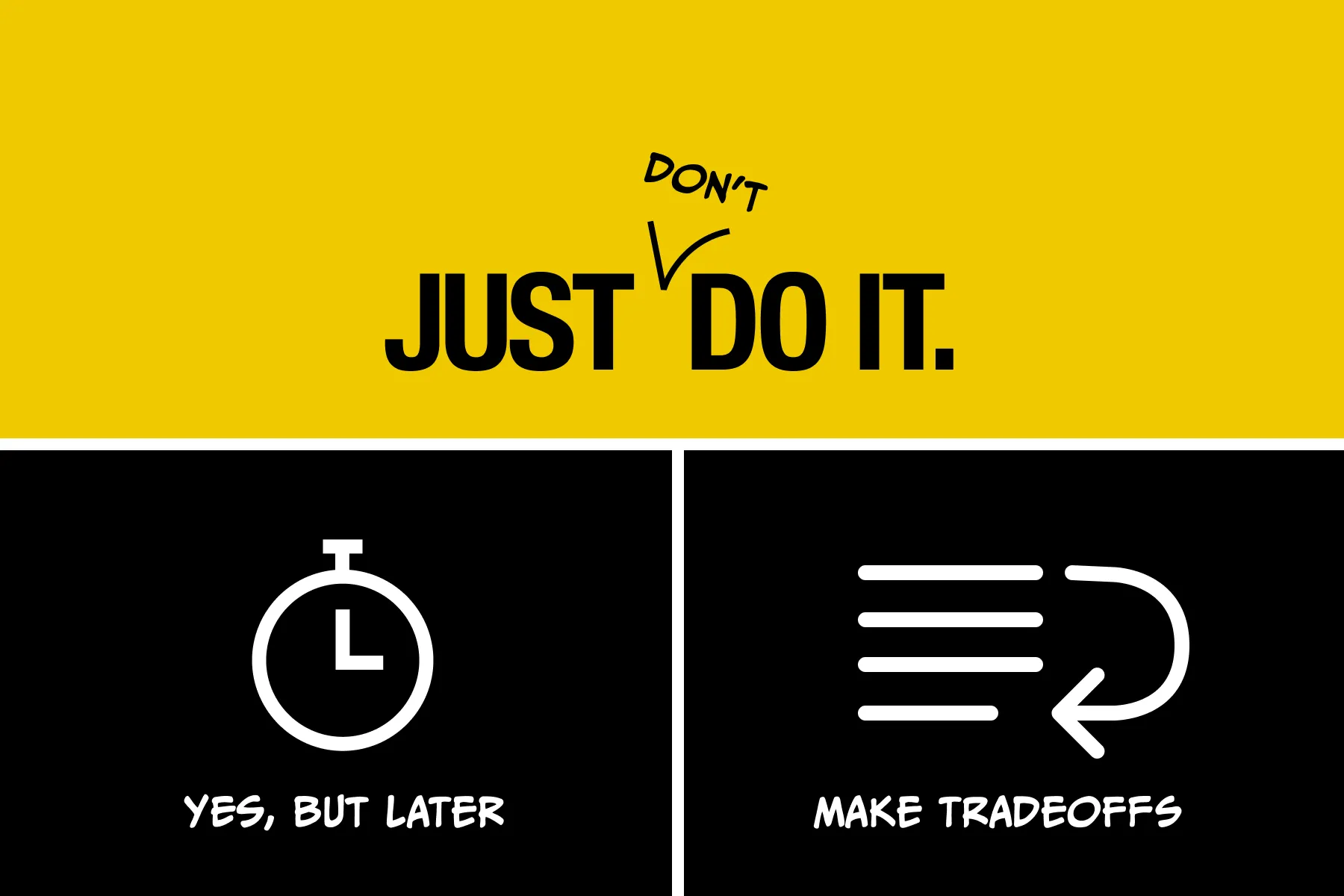
Just (don’t) do it.
You can squeeze efficiency out of every minute of your day but sometimes it’s not worth it. The best time-saving tip is to just say “no” to a project or a task that doesn’t bring much value. Now this can be hard to do, especially if you’ve just started a job and want to prove yourself.
Saying no is all about how you say it:
- Make tradeoffs — Give the option to your design (or product) manager as to which projects you should focus on and prioritize for now. Sometimes new, unforeseen initiatives come up all the time, and that’s ok. But ensuring your efforts are fully accounted for, the managers can figure out what’s a reasonable ask given what’s on your plate already.
- Yes, but later — say yes but preface it by saying you’ll be able to work on it when you complete your existing project or projects. This shows that you do want to take on the challenge but you also want to meet existing commitments first. Sometimes this means somebody else who does have capacity will take this assignment earlier but raising your hand anyway signals that you’re not afraid to take on the work.
By the way, if you truly want to grow, setting your own priorities and confirming those with your manager is the best way to go. Don’t wait for the work to come to you or be told what to do, take a proactive approach in looking for problems and solving them.
Take the time to rest and recover
Managers and employees want the same thing — a supportive place that helps people grow. It takes time to get there, and a vital balance needs to be struck between pushing yourself and taking time to recover.
Exercise is a good analogy here. When we work out, we try to break down the muscle fibers to be rebuilt and grow strong over time. But the rebuilding part takes time and rest. If we never rest — we’ll only get injured.
So make sure to pace yourself. The work is infinite, ever-expanding, and it will always be there. Triaging, prioritizing, and saying no should be all part of your toolkit for getting things done and staying healthy.
👋 Hey there! Are you a UX/Product Designer looking for your next role? Check out my latest book, Land Your Dream Design Job a guide to help UX designers uncover their role, assess skills, build a portfolio, prepare for interviews, negotiate compensation and hit the ground running on day one.