Get the product design salary you deserve—part 2
How to demonstrate your value and reach a mutually beneficial agreement

In part 1 we covered the basics of negotiation. We looked at how offers are structured and what to expect when it comes to compensation. Now we’ll get into the nitty gritty of negotiation tactics.
Start with your vision
Start with the end in mind. Before entering a negotiation, think through the factors that are important to you now. You don’t have to have a 5-year vision, nobody does. But having a solid plan for your next year, what you want to learn and the type of work you want to be doing will help you meaningfully make trade offs. We talked about this during the beginning of your job search, now’s a good time to revisit.
Not a zero sum pie
When we think of negotiation it’s not unusual to think of this as a zero-sum game. One player takes most and another is left with less. But that’s a losing proposition. You should reframe a negotiation as a conversation to come up with a win-win situation for both parties. This will not only lead to a good short-term outcome for you but also long-term goodwill down the road when your next assessment comes.
Stay enthusiastic about the role throughout the negotiation process as you’re building rapport with the recruiter. Thank them for the concessions as you’re approaching the offer together. Mention that you appreciate their willingness to listen and be flexible. Graciousness goes a long way—don’t miss an opportunity to make the other party feel fabulous. You’ve already built trust throughout the interview process, use the negotiation as a way to further reinforce your goodwill.
In turn, be willing to listen. Empathy is a designer’s master skill. If you can truly understand their issues, and the true issues behind those, you can come up with a creative way to solve the compensation problem while putting them at ease and getting closer towards your end goal.
Understand your design level
Your total comp is determined by a company’s leveling framework. The more senior you are, the more experience you have, the more money you’ll get. At higher senior levels your compensation will be predominantly based on your performance and will be closer tied to your equity.
Leveling will differ by company and one company’s L5 is another company’s L64 (but seriously why Microsoft?). If we were to boil down a leveling framework, we can think about design expertise as such:
- Junior — starting out in design, able to take direction but not yet proficient
- Mid — good grasp on fundamentals but inconsistent in craft, developing collaboration skills
- Senior — defines and reframe problems, gets to the heart of the matter, reliably comes up with strong solutions without supervision
- Staff — created new frameworks, comes up with ideas that solve multiple problems at once, leads senior designers
- Director — created new brands, defined industry trends, leads the company with other c-level counterparts and unlocks unique strengths in their design managers
When you have an offer in hand be sure to ask how design talent is evaluated at the company. What are the expectations for the role and what bands exist?
Lastly, more and more resources are coming out every day to help designers understand their career paths. Take a look at these resources for leveling:
- Design levels by Marissa Louie — overview of individual contributor and management level
- Intercom’s individual contributor design levels and design manager levels. Both are descriptive and point to specific tasks to help you grow, e.g. “Review About Face to understand IxD”
- progression.fyi — a collection of open source company ladders.
So what can you do to set yourself up for negotiation success? Let’s dive in.
Do your homework
We already talked about researching salary in the last article so I won’t elaborate on it too much here. Suffice it to say — do your research, learn what other companies pay for the band you’ve applied for. Beyond the numbers, peel back the layers. Is there additional know-how you can get on the compensation conversation? Is the company uncompromising on baseline salary but flexible with stock options? Blind is a good resource to look into this info.
You won’t have all perfect info at the end of the day but closing some gaps of this knowledge will put you in a stronger position during the negotiation.
Demonstrate your unique, valuable strengths
Negotiation starts when you first start applying so look for opportunities to reinforce the unique skills and knowledge that you bring to solve a specific pain (or multiple pains) for the company.
When I was applying through job boards (which is one of the worst ways to apply by the way) I was able to score an interview at a well known tech company due to advanced prototyping that I’ve done previously. It was by demonstrating the work in-person and letting the interviewers use my prototypes on their own that helped land an amazing offer.
So think of negotiation broadly. It’s not something that happens just at the end — a strong start can make a huge difference towards your final comp and leveling. But let’s say you already are at the end. In that case — it doesn’t hurt to reiterate the unique value that you bring.
High compensation = your unique design skills that you’re strong at + their pain point
Inevitably you will get push back around cost (“that’s all we can afford right now”) but reframing the discussion as that of investment for the company will help you steer the conversation in the right direction.
Use multiple offers to your advantage
If you’re in a lucky position to have multiple offers, be sure to compare and contrast. Talk with the recruiter about matching your highest offer’s salary. At this point you have some advantage here as a company would hate to lose a qualified candidate to a competitor. Beyond salary you can negotiate equity or maybe sweeten the deal with a one time signing bonus.
Understand that interviewing candidates is a long process. They’ve just gone through rounds of writing the job description, reviewing candidates, going through phone screens, getting designers to spend their time interviewing you and other candidates. Finally they narrowed it to one offer — yours. This whole process usually takes money and time and time is the most painful factor. They’d rather not go through a month and a half of work again.
Accelerate the interviewing process
Sometimes you’ll end up in a position where you’re still interviewing at one company but you already got an offer at another. If that’s the case be sure to let the company who’s still interviewing you that you’re already at the offer stage. This adds a bit of (valid) pressure on them to accelerate the interviewing process. Ideally, let the other company know the you’re late in the interviewing cycle with someone else. This will help you line up all your offer letters at the end.
What if there are no offers?
Lastly, you might not have any offers outstanding or anything to match against. You may even be out of a job so anything will look good right now. Alternatively you might get an offer from a place where you’d love to work and the starting salary is already high. What do you do? Two things—conditionally agree or restructure your offer based on things critical to you.
Continue reading this refreshed article on Holloway to learn how you can negotiate your salary.
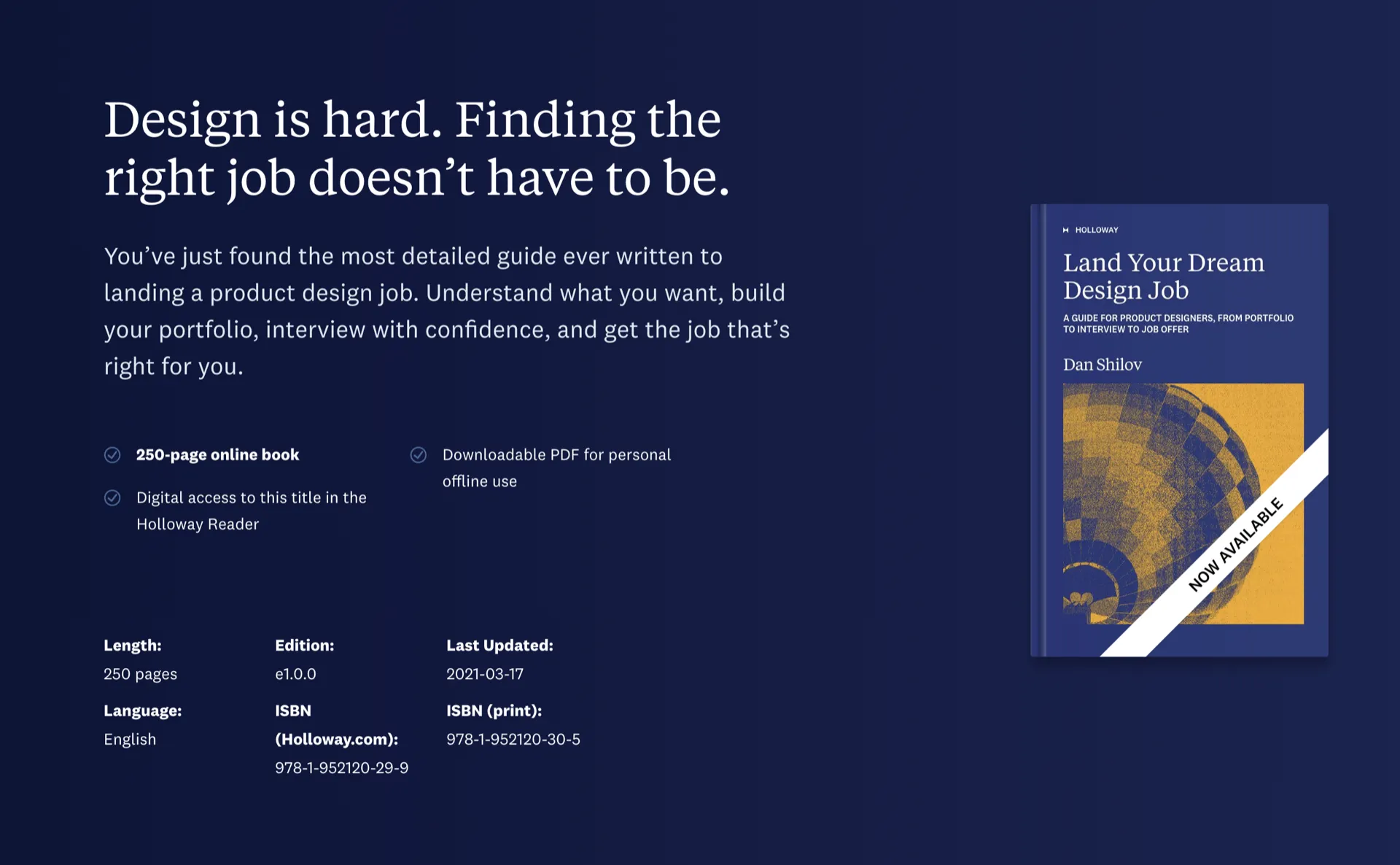
**Land Your Dream Design Job** is a comprehensive book about landing a product design role in a startup, agency, or tech company. It covers the entire design interview process from beginning to end, and will arm you with techniques and strategies to navigate the (at times) turbulent waters of job searching with confidence. This book will help guide you to a role that plays to your strengths while providing enough support for professional growth.
You’ll learn:
- What skills are expected of designers
- How to demonstrate those skills throughout the job search process
- How to identify your next opportunity
- How to target your job search process to stand out
- How to build a stand-out portfolio and tailor it to your dream opportunity
- The ins and outs of various design interview types from portfolio presentations, whiteboard challenges, app critiques, to take home design exercises and many others.
You’ll also find in-depth advice on how to apply beyond the job boards, and how to conduct due diligence, negotiate compensation, and accelerate onboarding to your new role.