Product design interview retro
What to do right after your on-site interview
You’ve wrapped up your product design interview on-site. Congrats! You’ve presented your portfolio, crushed the whiteboard challenge, aced the app critique and brought your best self to the behavioral interviews.
At this stage, you might have an interview line up right after or you may be early in the interview process with other places. Regardless, it helps to step back and reflect on the day. Don’t forget to also close strong by thanking your interviewers for their time.
A 15-minute post interview retro
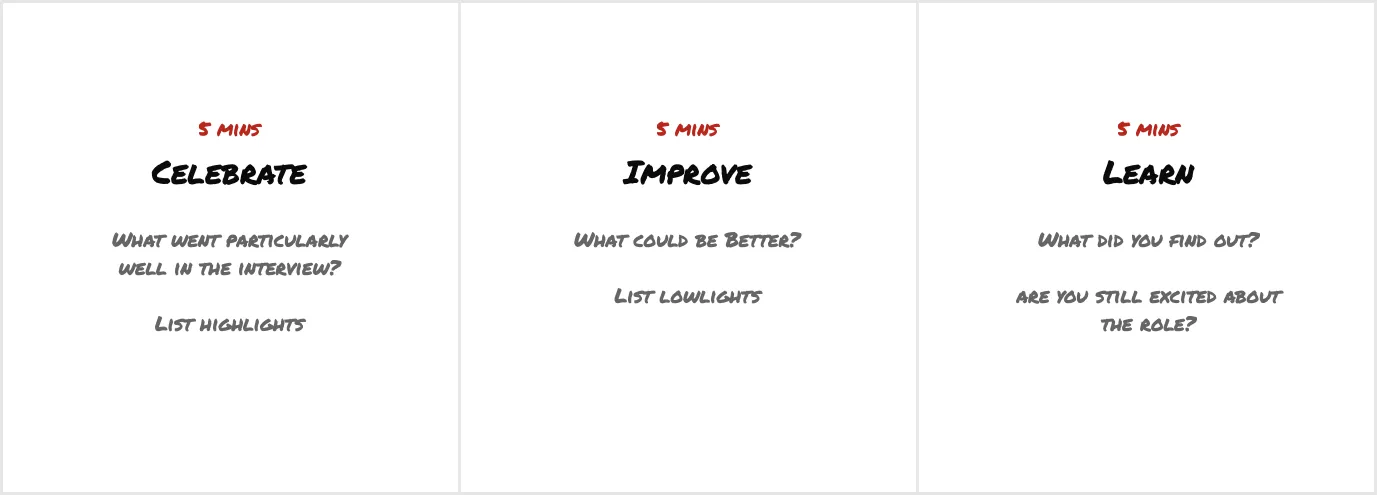
To begin, grab a piece of paper and fold it twice to make 3 columns and write: celebrate, improve, learn. Let’s dive into each section.
1. Celebrate: what went well?
When we’re in the middle of interviews things happen fast. Sometimes there’s little room for thinking and if you’re an introvert you may feel overwhelmed by the constant barrage of questions. So it helps to step back after the interview and celebrate the things that went particularly well,
- How did I set myself up for success during the interview?
- What question(s) did I pass with flying colors? What made it good?
- How did I closely connect with one of the interviewers?
During one interview exhausting day of interviews, I bonded with the founder over our mutual love of cooking, enough to exchange tips and recipes (and perhaps also to show that I was serious about it). In the spirit of bringing your whole self to work, it was a small thing that helped us connect.
For interviews that went poorly, look for highlights in specific moments. Capitalizing on things that you already do well helps build confidence in a process that sometimes feels opaque.
2. Improve: what could be better?
As you step back, try to think with eyes of an outside observer as if you’re watching yourself and the interviewer from the sidelines.
- How did you come across?
- What did you miss?
- What could you have done better?
I made a bozo mistake talking about a work conflict. Now conflicts aren’t unusual but the way I came across left the impression that I was blaming others for my failures (which was not the case) but I could have communicated this better. How you frame your response matters. Bring it up if the conflict brought growth, leave it if it didn’t.
Enjoying this article? Continue reading it for free in my latest book, Land Your Dream Design Job.
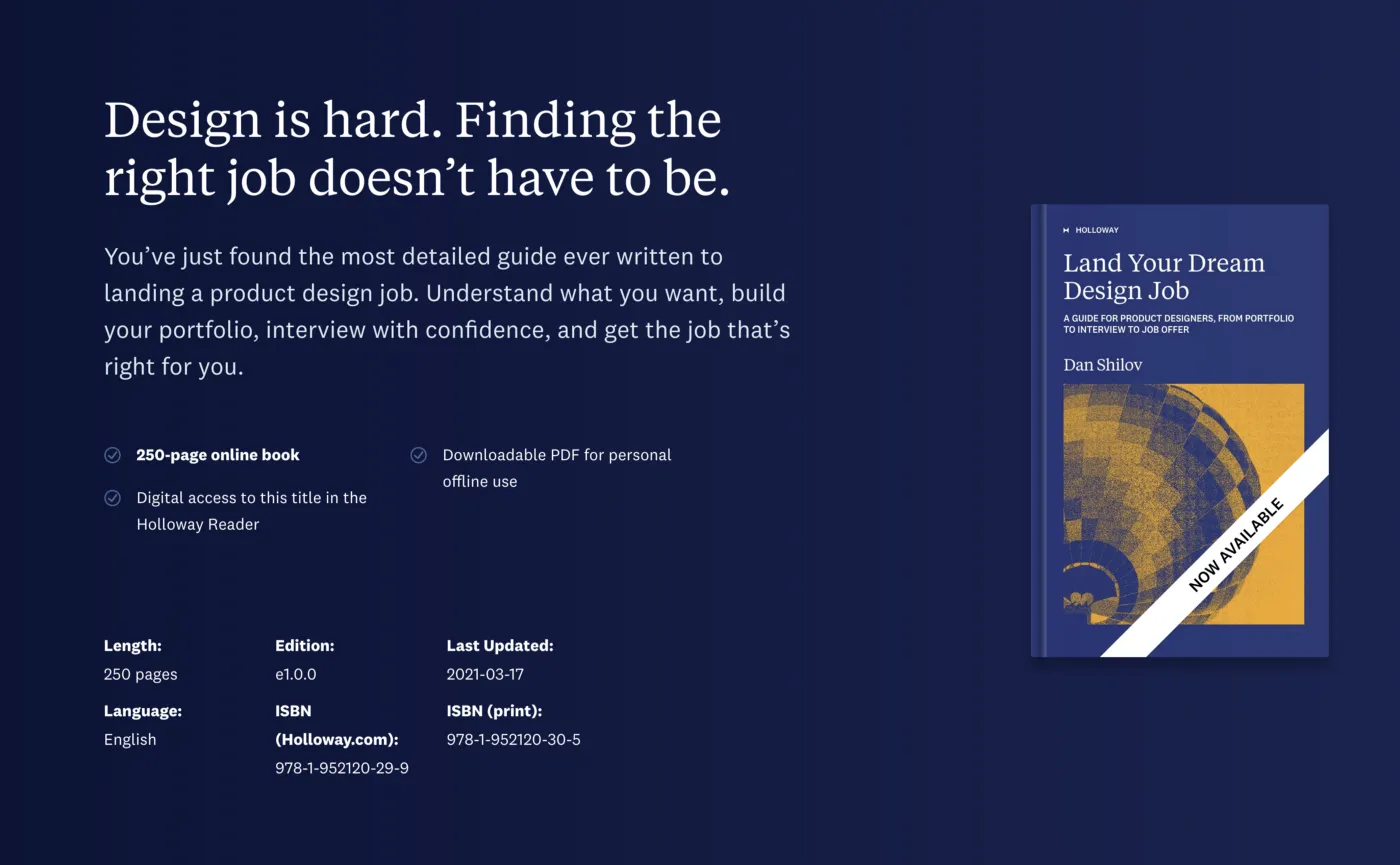
**Land Your Dream Design Job** is a comprehensive book about landing a product design role in a startup, agency, or tech company. It covers the entire design interview process from beginning to end, and will arm you with techniques and strategies to navigate the (at times) turbulent waters of job searching with confidence. This book will help guide you to a role that plays to your strengths while providing enough support for professional growth.
You’ll learn:
- What skills are expected of designers
- How to demonstrate those skills throughout the job search process
- How to identify your next opportunity
- How to target your job search process to stand out
- How to build a stand-out portfolio and tailor it to your dream opportunity
- The ins and outs of various design interview types from portfolio presentations, whiteboard challenges, app critiques, to take home design exercises and many others.
You’ll also find in-depth advice on how to apply beyond the job boards, and how to conduct due diligence, negotiate compensation, and accelerate onboarding to your new role.