Putting your product design job search on autopilot
Low-effort online strategies to land the first interview

In the last two articles of the mastering product design interviews series, we focused on targeted, high touch, offline strategies by reaching out proactively to people you want to work with and by visiting a networking event or two.
Now we’ll look at high impact and low effort online strategies such as:
- Making companies apply to you
- Getting exposure by promoting your portfolio in multiple channels
- Using job boards to find opportunities and people
- Exploring design communities for jobs
Using a blend of different methods, both offline and online will help maximize your chances of landing the phone screen.
1. Make companies apply to you
What if instead of applying to companies, the companies applied to you? Reverse job auction sites flip the traditional model of filling out the same form repeatedly for different companies. Instead you submit one candidate profile and companies bid on your profile over several rounds.
Although you won’t find the giants like Facebook or Google here, the caliber of tech companies is high. You’ll get outreach from smaller startups, mid-size companies as well as more larger and mature organizations like large consulting companies that are building up their design teams.

Some of the sites you should check out in this category:
I used Hired three times over three years to look for jobs and my last experience was the most successful. I think that’s more on Hired tweaking the algorithm over the years. Hired also offers a personal assistant to help you navigate the job process. To my knowledge no other platform has a free service like that.
That said, I’ve heard some designers didn’t have as much luck due to being either new to design or by applying internationally. So it can be a mix but don’t let that stop you from trying Hired or any of the other platforms out.
2. Promote your portfolio in design galleries
If you build it they won’t come. That’s why promoting your work is so important. Once you created your site and put your portfolio together it’s time to capitalize on your effort by showing it on other online platforms.
Bestfolios
Bestfolios curates 800+ designer portfolios. Use it for inspiration to see what portfolios look like from designers graduating from top design schools like CMU and working at companies like Apple, Google, Facebook, etc.
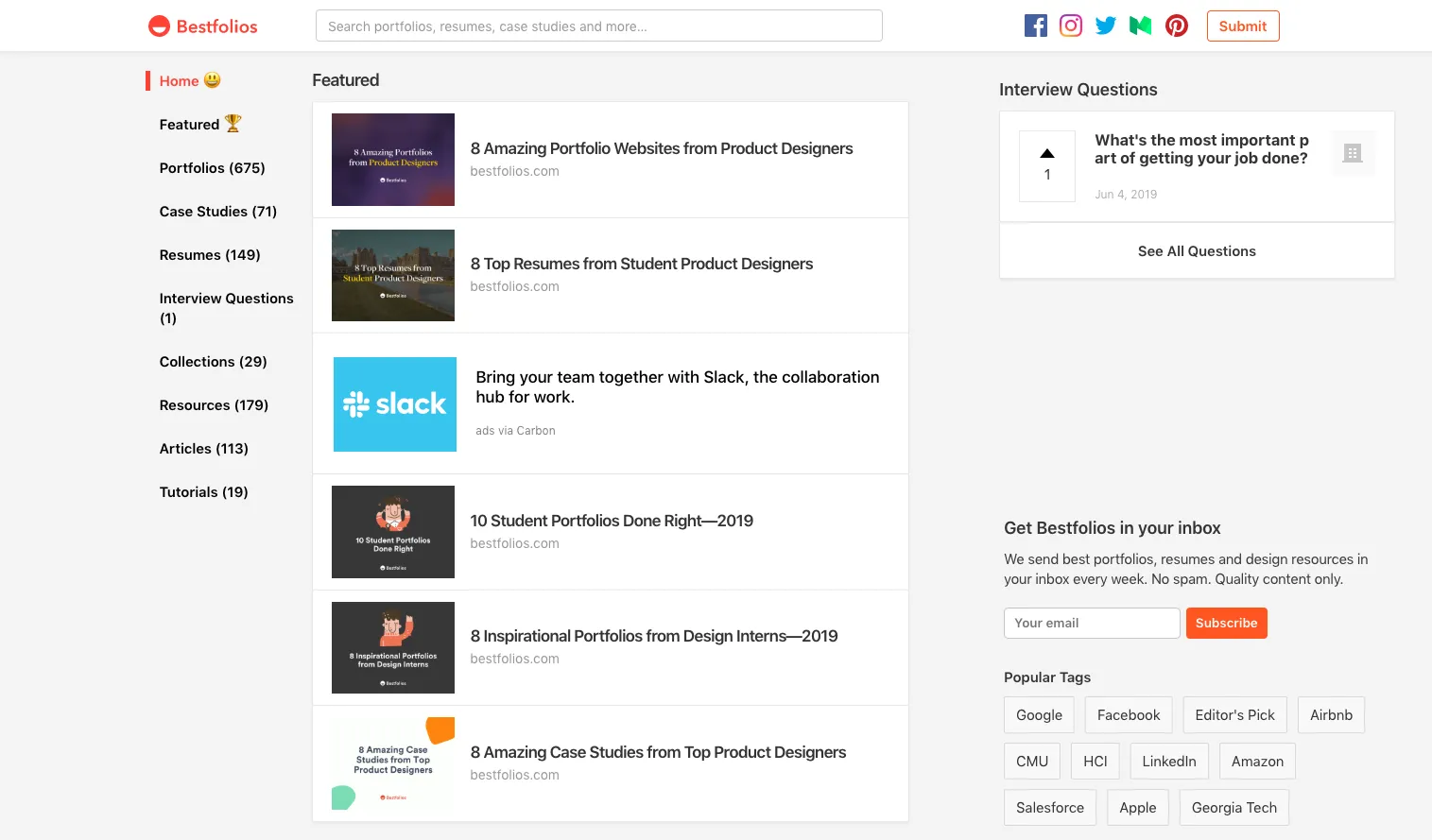
Some of my designer friends have been found by recruiters through bestfolios. A few years ago I won the editor’s pick and my site was marked as “clean” and “elegant” but since then I’ve had no time maintain the site and the portfolio quickly turned 3 years out of date. That said if you have a site that has the right level of polish — submit it.
If you build it they won’t come
Aside from featuring portfolios, Bestfolios is now adding glassdoor-like functionality—interview questions.
Dribbble and Behance
People have been talking about how Dribbble and Behance promote a culture of posting visually stunning work without context eliciting comments like “So cool bro!” And it’s true there’s some of that.
Designers view Dribbble as an exclusive club to get in but once you’re there the excitement stops. Recruiters who are looking for interaction designers, UX designers, or product designers find both platforms insufficient.
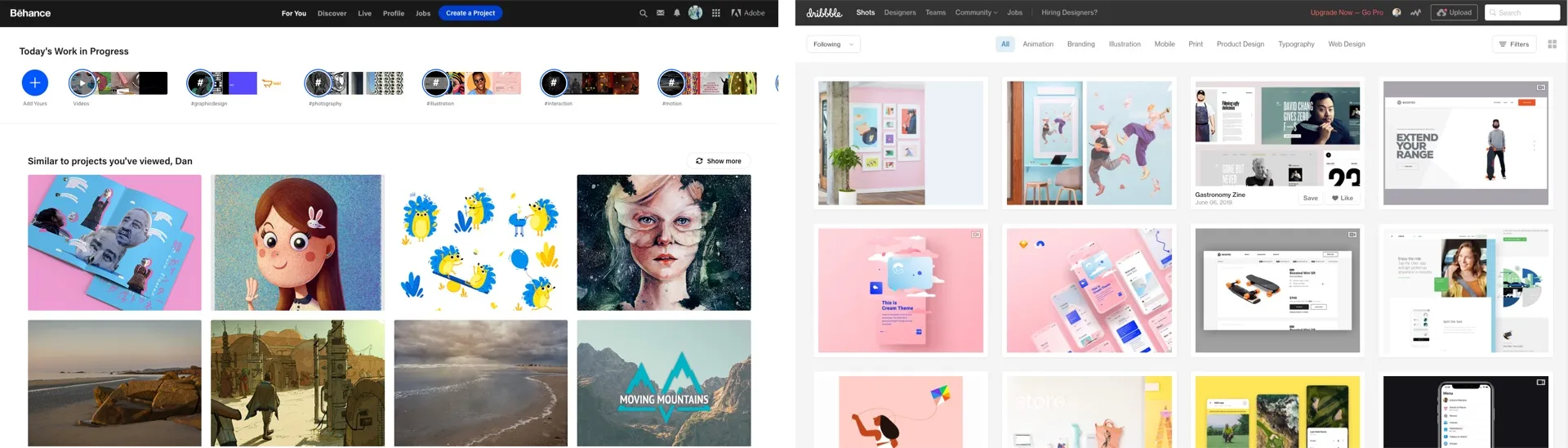
My advice is to think of these platforms as a teaser. Let recruiters get an idea of your work based on your snapshots then substantiate these with a detailed case study on your personal site. Both platforms receive a significant amount of traffic. If you’ve already put your portfolio together — take advantage of this, promote it.
Have you given Dribbble a shot? Did you post on Behance? How was your experience like?
3. Make the most of job boards
When applying to any job, the best approach is to establish a personal connection first. Without it, applying online is playing a game of numbers and the odds are usually not in your favor since you’re competing against many qualified candidates.
Yet it would be a mistake to ignore job boards altogether. Sites like LinkedIn provide advanced intelligence on companies, people, and salaries offered. If you do choose to apply through a job board, try to find out who the hiring manager is and follow-up with them directly.
Design specific job boards
In addition to job posts on Dribbble and Behance, take a look at these other design resources too:
Continue reading an updated and refreshed version of this article to learn all about how you can put your design job search an autopilot.
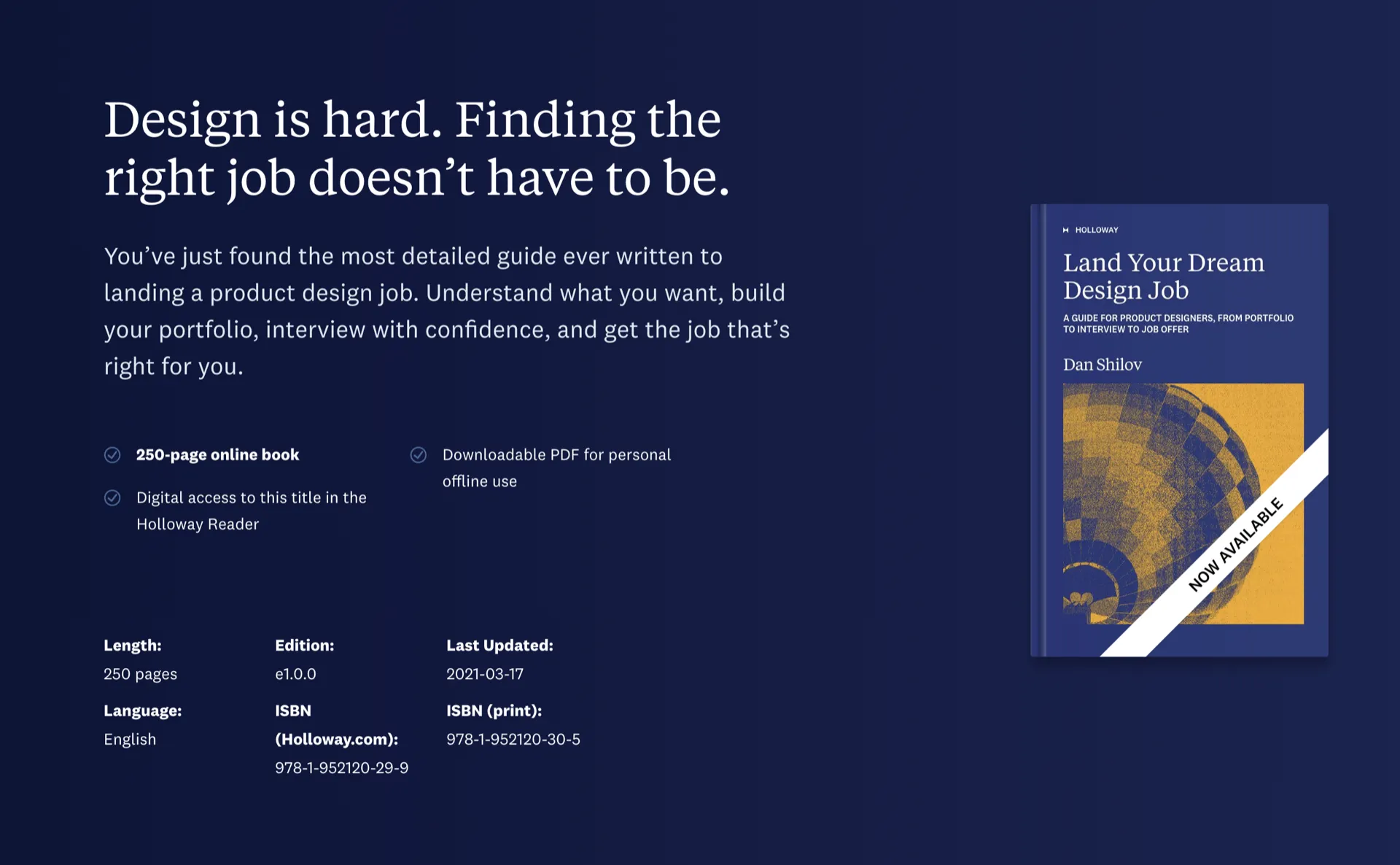
**Land Your Dream Design Job** is a comprehensive book about landing a product design role in a startup, agency, or tech company. It covers the entire design interview process from beginning to end, and will arm you with techniques and strategies to navigate the (at times) turbulent waters of job searching with confidence. This book will help guide you to a role that plays to your strengths while providing enough support for professional growth.
You’ll learn:
- What skills are expected of designers
- How to demonstrate those skills throughout the job search process
- How to identify your next opportunity
- How to target your job search process to stand out
- How to build a stand-out portfolio and tailor it to your dream opportunity
- The ins and outs of various design interview types from portfolio presentations, whiteboard challenges, app critiques, to take home design exercises and many others.
You’ll also find in-depth advice on how to apply beyond the job boards, and how to conduct due diligence, negotiate compensation, and accelerate onboarding to your new role.