Waiting proactively in your job search
Taking ownership of your job search process and moving it forward with these three tips

You connected with people offline, you’ve gone out to networking events, and you’ve tried multiple strategies by promoting your work online. Now the waiting begins. Sometimes it’s just a matter of time, the person reviewing your application might be busy or on vacation.
That said, when I was looking for a job without having one—every day counts. If that’s the case, you have more control than you think. Here are two primary actions you can take,
- Continue applying to more places, or
- Follow-up with places you’ve applied to get a clear answer on where you stand and what the next step is
Since we already covered various strategies for the former, we’ll focus primarily on the latter half — the follow-up. A big part of getting the first (phone) interview is figuring out what’s happening on the other side. Did they get your application? Is the job still open?
You can get to an answer by proactively reaching out to the employer by:
- Sending a personalized email reiterating your interest and letting them know about your application
- Calling on the phone and potentially leaving a succinct, actionable voicemail that get them to respond
- Meeting in person through a networking event or even for coffee
Your approach should be personable and focused. You’re not looking for any job. You’re interested in this specific position that this company has and it would be their loss to not hire you.

Sales thinking for job applicants
What comes to mind when you think of sales? Mad men? Do you view it as a necessary evil? The truth is, promoting your work, letting people know of your achievements is a big part of career success long after you get the job.
Think of applying to jobs as a sales process with a cycle. Every application you submit is like prospecting. You’re generating a qualified list of companies and roles that could be a good fit. Then you develop that relationship further through various means of contact.
An important part of sales is understanding your clients’ needs. After your conversation you might discover that this is not the right place for you after all. Or they might reveal specific requirements they’re looking for that you can mention to them in your presentation.

1. Sending an e-mail that gets a response
Here’s a general format to follow. Think of this similar to a pilot’s checklist, ensuring you got the obvious and basic things covered before lift off.
- Catchy title — grab their attention
- Address by name — this shows that you’ve done your homework in finding who the recruiter or the hiring manager is
- Let them know you’re inquiring about this specific role
- Tell them how they know you — you either have chatted with them on the phone or this is the first time reaching out, maybe there’s a connection you have in common
- Get specific — show them relevant projects that you’ve done that are in this industry or close to the work that they do.
- Build enthusiasm — get them excited by being enthusiastic in your message about this job and the value you can bring to the team.
- Close with the ask — when would be a good time for us to chat? Suggest a couple of time frames and mention that you’ll follow up with a phone call next week if you don’t hear back from them.
You can use this general format for the initial outreach or incorporate parts of it in a thank you e-mail after the conversation. If this is their first time hearing about you — you want to make sure you start off the conversation strong.
The response
In my experience there are usually three basic responses you will get. Here are the underlying messages behind them,
Yes — come on in, we want to get to know you better, it looks like your skill is on par or slightly above average, it’s possible you could be a good fit
Maybe — we’re not sure about you based on what we’ve seen, we might be looking at other candidates, this job might not be available soon and we’re unsure ourselves
No — we perceive your skill to not match the job requirements. You might be too strong or not have enough experience yet. We might not want to tell you this due to legal limitations.
If you do get an outright rejection, treat it as a gift. In today’s world of recruiters ghosting candidates, candidates ghosting jobs — having some transparency is helpful so you can focus your energy on quality opportunities.
A no is a not now. Take the rejection as an opportunity to follow-up thanking them for their time and ask if can get their feedback on areas where you can improve. Suggest that you’d like to stay in touch so that when the timing is right the next time, you’ll both be on each other’s radars.

The ghost response
Sometimes you won’t hear back (yet). People are busy, e-mails get lost or sometimes folks just forget to respond. Reach out again in about two weeks or better yet follow-up with a phone call (remember, you already mentioned this in your email above).
A few years ago I was applying for a product designer role at the same company but in a different department. Because it’s an internal job board you would think I’d get a response quickly after submitting the application. However it took at least a month and a couple of follow-ups to understand that although they were actively interviewing, they never received my application to begin with.
So don’t despair if you don’t get an immediate response, there many reasons why that could be the case. The important thing is to get clarity on where you stand in the process and keep moving your application forward.

2. Following-up with a phone call
Nobody calls anybody these days. That’s why reaching out with a friendly phone reminder is a good tactic. It also flips the dynamic, now instead of waiting for them to interview you over the phone, you have a little bit of leverage to interview them before the official interview starts.
Your phone call should follow the same principles as your email. Get in the enthusiastic frame of mind, mention your application, how excited you are and inquire what the next steps are. Sometimes you might even be able to get away saying you’ll be in the area next week and wouldn’t it be great to do a quick chat in person.
It helps to practice this conversation ahead of time. If you have a friend do a quick rehearsal. Consider writing out the key points and questions before the call. You won’t have a lot of time on the phone, probably 2 to 5 minutes if the conversation goes smoothly, so make that time count.
The key points are also helpful if you’re leaving a message. In that case also make sure to leave your number, repeat it slowly twice at the end of your message along with your name.

3. Meeting your interviewer in person
If all else fails just show up at their office right? That tactic of showing up unannounced might get you escorted out by security. Ideally you’ve been able to move the process along so that you’ve sent an email, called and now you’ve set up a meeting in person.
Another way you can meet your prospective employer by looking at which networking events they’re participating in and where they might be headed off to next. Usually smaller companies announce conferences they’re attending, presenting at or if they’ll have a presence such as booth to demonstrate their services or product.
In my experience some of the best ways that I’ve connected with employers was by following up with them at professional networking events. If I’ve already submitted an application or even when I already interviewed with them, it was useful to chat with them in an environment that’s more relaxed.
Getting to yes and no
Hopefully this article gave you some new tactics to try. The key principle that helped me when I was going through this process myself a couple of times was getting clarity and feedback.
When I wasn’t sure what was going on the other side, I reached out. I got plenty of rejections along the way but having a clear answer was more helpful than no answer at all.
As you get feedback rolling in, use this as an opportunity to further improve your application, your communication skills and the types of companies you approach. Good luck out there and keep learning!
Interested in learning more?
Check out my latest book from Holloway, Land Your Dream Design Job.
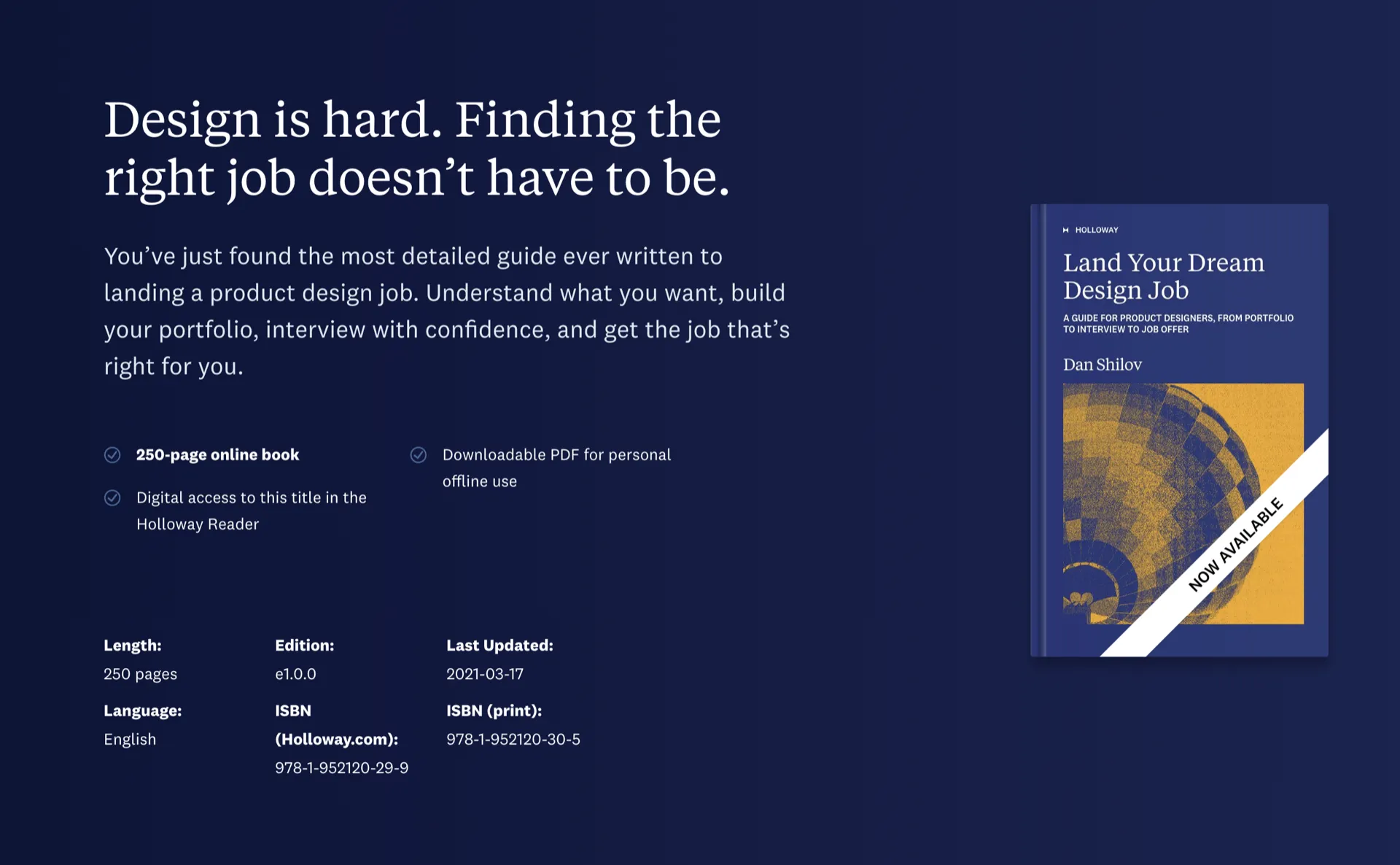
**Land Your Dream Design Job** is a comprehensive book about landing a product design role in a startup, agency, or tech company. It covers the entire design interview process from beginning to end, and will arm you with techniques and strategies to navigate the (at times) turbulent waters of job searching with confidence. This book will help guide you to a role that plays to your strengths while providing enough support for professional growth.
You’ll learn:
- What skills are expected of designers
- How to demonstrate those skills throughout the job search process
- How to identify your next opportunity
- How to target your job search process to stand out
- How to build a stand-out portfolio and tailor it to your dream opportunity
- The ins and outs of various design interview types from portfolio presentations, whiteboard challenges, app critiques, to take home design exercises and many others.
You’ll also find in-depth advice on how to apply beyond the job boards, and how to conduct due diligence, negotiate compensation, and accelerate onboarding to your new role.