Hiring your product design job, part 3: location, specialization and impact
Deciding what culture fits you best, if you want to specialize in an industry, and impact you want to leave behind

In the first two parts we covered environments and types of problems you should consider. Now we’ll dive deeper into location, specialization and the type of impact you would like to achieve.
Location, location, location
In today’s largely digitized world, the physical environment still matters. If you’re in US, metro areas are the best places for professional growth:
- The Bay Area is still a major hub for tech innovation but new places and cities are starting to bloom.
- New York City has its own tech hub while being relatively diverse.
- Boston marries design, tech, strong engineering and healthcare.
When looking at companies it helps to shop for a good ecosystem. According to Hired’s 2018 report Seattle, Austin, Denver are some of the top cities for relocation for tech workers.
When I first started in design I spent my time working in largely suburban areas in New Hampshire and Connecticut. If I was lucky there was one design event a month and the design community was tiny though eager to learn. After moving to San Francisco my options exploded. There seems to be no shortage of design events (like SF Design Week in the summer) and opportunities for meeting and networking with people.
Aside from connecting with other designers, there are courses and training for product managers, bootcamps for new engineers, and overall a vibrant ecosystem that supports professional development. Many of my colleagues in tech report similar experiences moving from east coast to west coast.
Of course depending on where you are in your career (and life) it’s not as simple to just pack your bags and leave. But an ecosystem that’s growing and evolving is helpful for career prospects. When the world is turning to virtual meetings — getting face time is still just as critical. So research your geographical locations closely and think not just of the company but also the surrounding environment.
Domain expert or industry-agnostic designer?
As an industry specialist you’ll be able to get up to speed quickly and command a premium for your salary. As a generalist designer you can play on your strengths of applying your design expertise broadly leading to breakthrough solutions that a specialist might have missed.
Industry specialization
As a designer specializing in an industry, you will be at a competitive advantage over other candidates. You’ll understand the domain deeply and the company hiring you won’t need to spend a large portion of time in training and onboarding meaning you can start to make an impact faster.
If you’re coming to the design from another role (e.g. education), this could be a good way to get an in. For example new designers who have worked in your field (let’s say as a nurse practitioner) will have a domain knowledge advantage over designers who have never done work in this space.
In the last decade, design has tried to approach the so-called wicked problems of education and healthcare with various successes. These domains are complex…
Continue reading an updated and refreshed version of this article to learn more about location and specialization for UX and Product Designers in my latest book from Holloway, Land Your Dream Design Job.
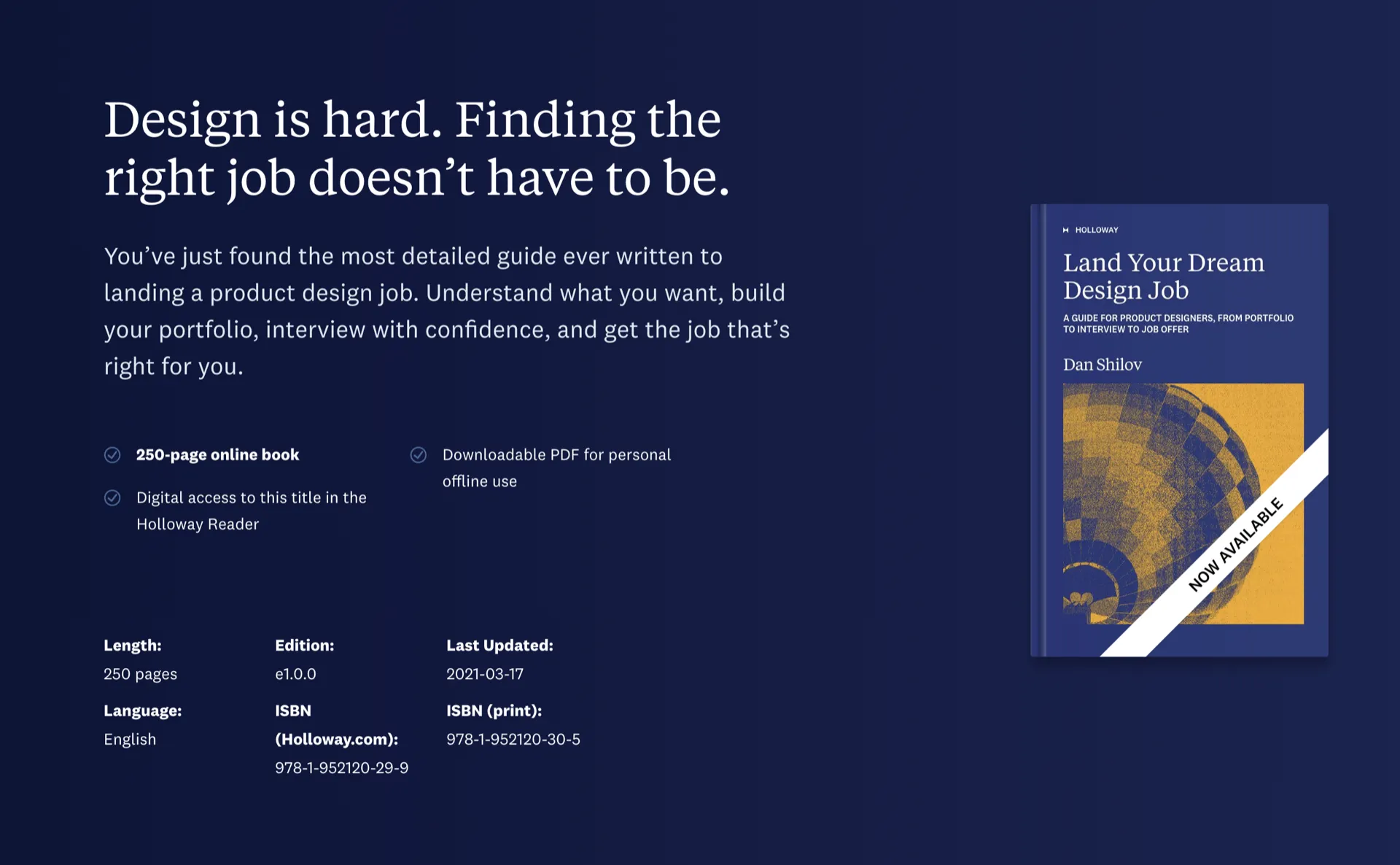
*Land Your Dream Design Job* is a comprehensive book about landing a product design role in a startup, agency, or tech company. It covers the entire design interview process from beginning to end, and will arm you with techniques and strategies to navigate the (at times) turbulent waters of job searching with confidence. This book will help guide you to a role that plays to your strengths while providing enough support for professional growth.
You’ll learn:
- What skills are expected of designers
- How to demonstrate those skills throughout the job search process
- How to identify your next opportunity
- How to target your job search process to stand out
- How to build a stand-out portfolio and tailor it to your dream opportunity
- The ins and outs of various design interview types from portfolio presentations, whiteboard challenges, app critiques, to take home design exercises and many others.
You’ll also find in-depth advice on how to apply beyond the job boards, and how to conduct due diligence, negotiate compensation, and accelerate onboarding to your new role.